How Does Ambient Temperature Affect Battery Performance?
In today's era of widespread new energy adoption, batteries have long permeated every aspect of our lives—from home energy storage and outdoor power supplies to industrial equipment and drones. Their stable operation directly determines the usability and reliability of the equipment. However, many people overlook a key variable: ambient temperature. Whether it's the extreme cold of winter or the scorching heat of summer, it will quietly change the "working state" of the battery, affecting its capacity, lifespan, and safety. In fact, batteries have their own "comfort zone"; when the temperature deviates from this range, performance will fluctuate significantly, and safety hazards may even arise. Today, we will delve into the core impact of ambient temperature on battery performance and reveal how UFO-POWER lithium iron phosphate battery packs break through temperature limitations to achieve stable output in all scenarios.
I. In-depth Analysis: How Does Ambient Temperature Affect Battery Performance?
The essence of battery charging and discharging is the "migratory movement" of lithium ions between the positive and negative electrodes, and temperature is the key factor determining the efficiency of this "movement"—low temperatures make lithium ions "slow to move," while high temperatures make them "move chaotically." Both will lead to poor battery performance and even irreversible damage. Taking the current mainstream lithium-ion batteries as an example, we will analyze the specific impact of temperature on battery performance from two dimensions: high temperature and low temperature.
. High-Temperature Environment: Accelerated Aging and Hidden Safety Hazards
When the ambient temperature exceeds 45℃, the battery will gradually enter the "discomfort zone." Long-term exposure to high temperatures will not only accelerate performance degradation but also pose safety risks. From the internal mechanism, high temperatures trigger a series of chain reactions inside the battery: first, the SEI film (equivalent to the battery's "skin") on the surface of the negative electrode begins to decompose and rupture at 90℃-120℃, releasing heat; then, the exposed lithium ions react violently with the electrolyte, further increasing the temperature; when the temperature exceeds 200℃, the electrolyte decomposes to produce gas and heat, and the positive electrode in the charged state also decomposes to release oxygen, which combines with the flammable electrolyte, eventually leading to thermal runaway, with risks of battery bulging, smoking, or even combustion and explosion.
In practical use, the hazards of high temperatures are mainly reflected in three aspects: first, rapid capacity attenuation. Each reconstruction of the SEI film consumes active lithium ions, resulting in a visible reduction in battery life. Long-term use in an environment above 50℃ will significantly accelerate the rate of capacity attenuation; second, greatly shortened lifespan. High temperatures accelerate side reactions inside the battery, and active lithium is continuously consumed. A battery that could originally be used for 3-5 years may show obvious aging in 1-2 years; third, reduced charging and discharging efficiency. High temperatures increase the internal impedance of the battery, just like a "congested highway," hindering the passage of current, resulting in slower charging and weaker power output.
. Low-Temperature Environment: Performance "Frozen" and Prone to Irreversible Damage
Compared with high temperatures, the impact of low temperatures on batteries is more subtle and easier to overlook. When the ambient temperature is below 0℃, the performance of the battery will start to "decline," and the lower the temperature, the more obvious the impact. The core reason is that low temperatures increase the viscosity and decrease the conductivity of the electrolyte, just like "frozen river channels," slowing down the diffusion rate of lithium ions, making it difficult for them to migrate smoothly between the positive and negative electrodes, thereby leading to reduced battery performance.
Specifically, the impact of low temperatures on batteries is mainly reflected in three points: first, reversible capacity attenuation. At 0℃, the available capacity of the battery drops to about 85% of that at room temperature, only 70% at -10℃, and more than half of the capacity is lost at -30℃. This attenuation can be recovered when the temperature rises, such as the shortened range of electric vehicles in winter, which can return to normal when the temperature warms up in spring; second, limited charging and discharging power. Low temperatures cause a sharp increase in the internal impedance of the battery. After -20℃, the electrolyte impedance rises sharply, and the battery cannot output high power, which is manifested as difficulty in starting the equipment and insufficient power; third, irreversible damage. When charging at low temperatures (especially below 0℃), lithium ions cannot be embedded into the negative electrode in time and will precipitate to form metallic lithium dendrites. These "dendritic" crystals not only consume active lithium ions but may also pierce the separator, causing a short circuit and permanent capacity loss or even safety risks.
It is worth noting that different types of lithium batteries have different temperature resistance performances. Among them, the thermal stability of lithium iron phosphate batteries is far superior to that of ternary lithium batteries. Their thermal runaway temperature is as high as 500℃ or more, while that of ternary lithium batteries is only 200-300℃. However, lithium iron phosphate batteries are more sensitive to low temperatures, but this shortcoming can be effectively alleviated through technical optimization.
II. Breaking Through Temperature Limitations: The Solution of UFO-POWER Lithium Iron Phosphate Battery Packs
Faced with the constraints of high and low temperatures on battery performance, especially the temperature challenges in complex scenarios such as industry, energy storage, and outdoor use, UFO-POWER has created lithium iron phosphate battery packs suitable for all temperature scenarios with 15 years of R&D experience, more than 150 patents, and the technical accumulation of more than 400 engineers, breaking the temperature bottleneck of traditional batteries and achieving stable performance of "no attenuation in extreme cold and safer in high temperatures."
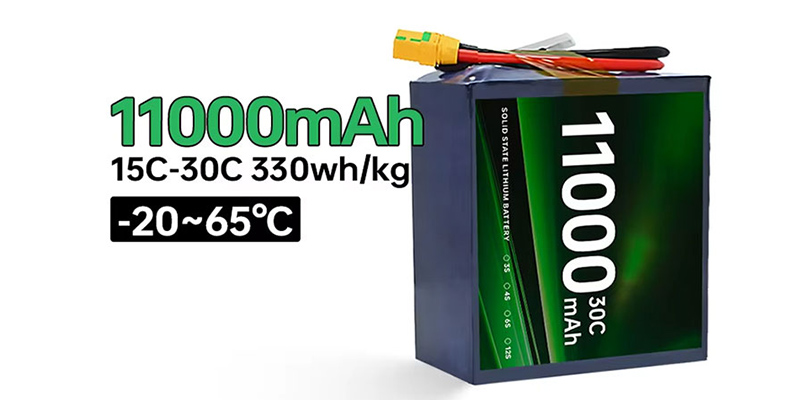
First, wide temperature range adaptation, covering extreme scenarios. Unlike traditional lithium iron phosphate batteries that can only operate at -20℃ to 60℃, UFO-POWER lithium iron phosphate battery packs expand the operating temperature range to -50℃ to +60℃ through electrolyte upgrading (adding low-temperature adaptive additives) and electrode material modification (optimizing crystal structure). They can still maintain more than 90% capacity in extreme cold environments, completely solving the problems of low-temperature range attenuation and failure to start; in high-temperature environments, relying on the natural advantages of their lithium iron phosphate cells (thermal runaway temperature above 500℃) and equipped with an intelligent heat dissipation system, they can effectively inhibit electrolyte decomposition and side reactions, avoid thermal runaway risks, and the capacity attenuation can still be controlled within a reasonable range when used in an environment above 45℃ for a long time.
Second, intelligent temperature control + precise management, balancing performance and lifespan. UFO-POWER lithium iron phosphate battery packs are equipped with an advanced BMS (Battery Management System), which can automatically monitor the cell temperature, voltage, and current, and adjust the charging and discharging strategy in real time—automatically starting the preheating function at low temperatures to raise the battery temperature to the optimal working range (20-25℃) to avoid lithium dendrite precipitation; starting intelligent heat dissipation at high temperatures to maintain stable battery temperature and reduce active lithium consumption. At the same time, the system also has an alarm function, which can timely warn of temperature abnormalities, further improving the safety of battery use, and making the battery cycle life exceed 5,000 times, far exceeding the 500-cycle limit of traditional lithium iron phosphate batteries.
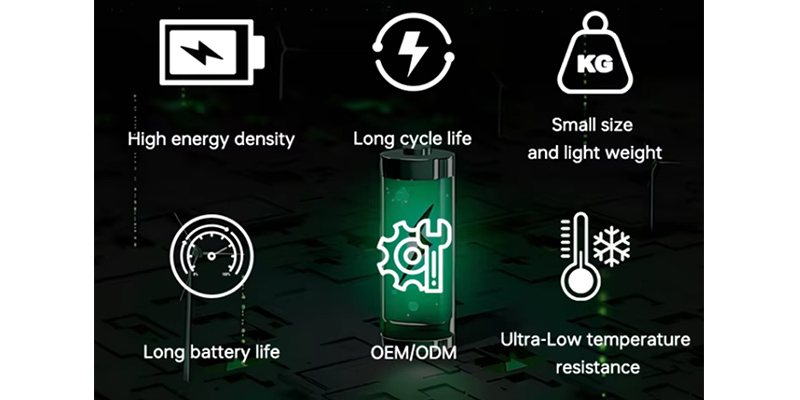
Finally, full-scenario adaptation, balancing safety and efficiency. Whether it is outdoor energy storage in high-latitude extreme cold areas, industrial equipment under high-temperature exposure, or home energy storage, drone power supply and other scenarios, UFO-POWER lithium iron phosphate battery packs can output stably. Its lightweight design and high energy density can flexibly adapt to the needs of different equipment, and it supports parallel expansion to meet different capacity needs; it also has maintenance-free characteristics, eliminating the need for frequent maintenance, greatly reducing the use cost, and perfectly solving the problem of batteries "breaking down" in complex temperature environments.
III. Temperature Control is the Key to Stable Battery Operation
In summary, ambient temperature is the core variable affecting battery performance, lifespan, and safety—high temperatures accelerate aging and hide safety hazards, while low temperatures cause performance attenuation and are prone to irreversible damage. Both restrict the practical application of batteries. Choosing a battery product with wide temperature range adaptation and intelligent temperature control capabilities is the key to solving this problem.
UFO-POWER lithium iron phosphate battery packs, relying on the natural safety advantages of lithium iron phosphate cells, combined with independently developed low-temperature adaptation technology and intelligent management systems, break the limitations of temperature on battery performance, achieving stable operation in the full temperature range of -50℃ to +60℃. They not only solve the safety hazards in high-temperature environments but also alleviate the performance attenuation in low-temperature environments, balancing safety, stability, and long-term effectiveness.
Choosing UFO-POWER lithium iron phosphate battery packs can effectively avoid the impact of temperature on equipment operation, extend battery life, reduce maintenance costs, and provide safe, stable, and efficient energy storage support for various scenarios. In the future, UFO-POWER will continue to deepen battery technology, continuously optimize temperature adaptation capabilities, and empower more scenarios.