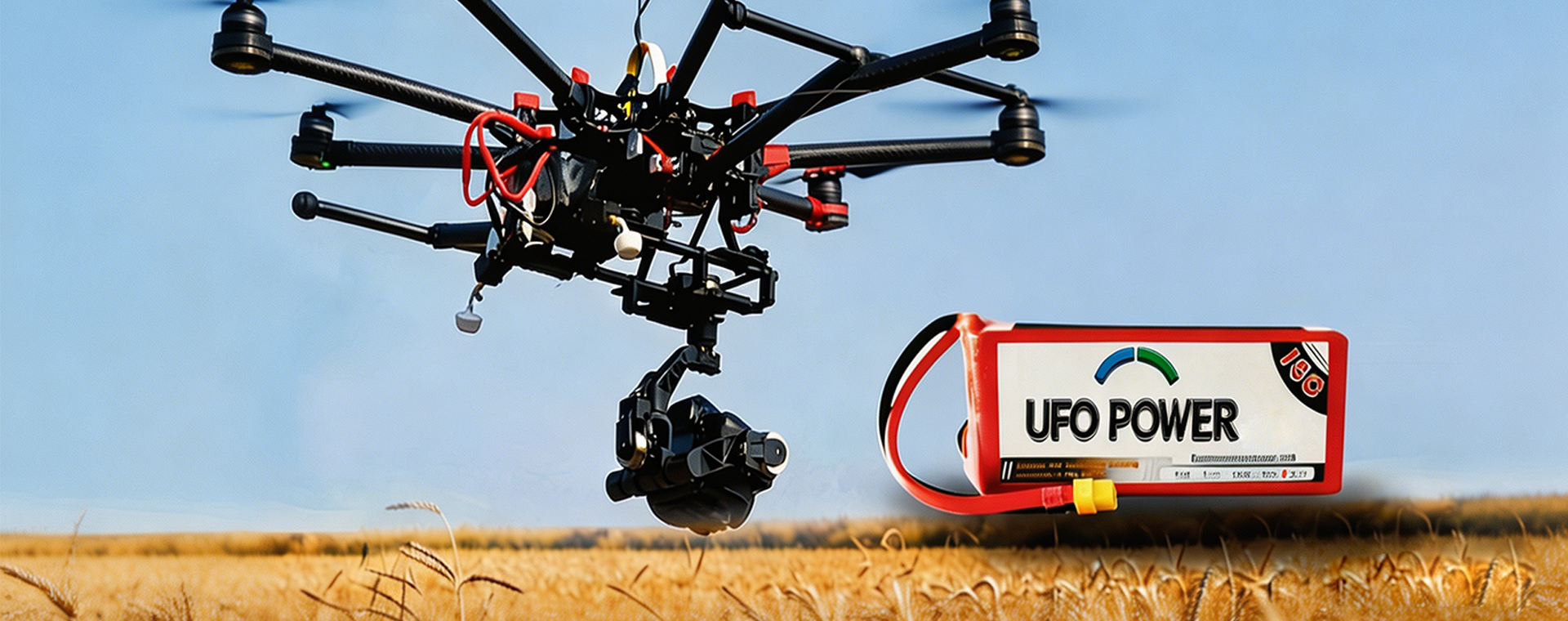
Drone Batteries
Using Solar-Powered Appliances to Reduce Energy Costs
Nowadays, with the continuous rise of global energy prices, how to effectively reduce energy costs has become the focus of attention for families and society. Solar-powered appliances, relying on their unique way of energy utilization, have become a powerful weapon to solve this problem, which can significantly reduce people's energy expenses.
I. Working Principle of Solar-Powered Appliances
The core reason why solar-powered appliances can achieve energy self-sufficiency lies in their efficient conversion and utilization of solar energy. They mainly consist of three parts: photovoltaic modules, energy storage devices, and electrical loads. Photovoltaic modules, which are commonly known as solar panels, are composed of multiple solar cells made of semiconductor materials. When sunlight shines on the panels, the electrons in the semiconductor materials absorb photon energy and move directionally, thereby generating direct current. The generated direct current will be transmitted to energy storage devices, such as batteries, through a controller for storage, so as to supply power to the appliances when there is insufficient light or at night. Some solar-powered appliances can also directly supply the generated electricity to the appliances when there is sufficient light, realizing instant power supply.
II. Comparison of Electricity Bills Between Traditional Appliances and Solar-Powered Appliances
Take Berlin, Germany as an example. According to data from the German Association of Energy and Water Industries, the average household electricity price in Germany in 2024 was 40.92 euro cents per kilowatt-hour. This price is not fixed and will fluctuate due to different electricity consumption time periods, seasons, and household electricity consumption. In addition to the basic electricity price, household electricity bills also include various taxes, grid maintenance fees, and other additional costs.
Take a traditional electric fan with a power of 50 watts as an example. Suppose in Berlin, the fan is used for an average of 8 hours a day. Its daily power consumption is 50 watts × 8 hours = 400 watt-hours = 0.4 kilowatt-hours. Calculated at 40.92 euro cents per kilowatt-hour, the daily electricity cost is approximately 0.4 × 40.92 = 16.368 euro cents. In a month (calculated as 30 days), the electricity cost is about 16.368 × 30 = 491.04 euro cents, which is approximately 4.91 euros. In reality, due to the complex composition of electricity bills in Berlin, which includes additional fees such as energy tax and renewable energy surcharge, the actual electricity cost paid will be higher than the result calculated solely based on the basic electricity price.
In contrast, a solar-powered fan of the same power, under sufficient lighting conditions in Berlin, can obtain the electricity needed for its operation from solar panels most of the time. Even in periods of poor lighting, when it needs a small amount of supplementary power from the grid, its dependence on grid electricity is extremely low. In this way, the electricity cost savings from using a solar-powered fan for a long time are extremely significant, and the almost negligible electricity expenditure forms a sharp contrast with that of traditional fans.
III. Advantages of Savinglights Solar-Powered Appliances
In addition to the common advantage of saving electricity costs shared by the above-mentioned solar-powered appliances, Savinglights' solar-powered appliances have their unique highlights.
Savinglights solar powered appliances adopt polycrystalline silicon solar panels, which have many advantages. Polycrystalline silicon materials are abundant in sources and have relatively low production costs, which can reduce the product price while ensuring performance, making them affordable for more users. Moreover, the photoelectric conversion efficiency of polycrystalline silicon solar panels is relatively stable, and they can maintain good power generation performance under different light intensities and angles. They are especially suitable for areas like Berlin where lighting conditions have certain changes. Even when the light is not particularly strong, they can effectively convert solar energy into electricity to continuously supply power to the appliances.
In terms of energy storage, Savinglights has chosen lithium batteries as energy storage devices. Lithium batteries have high energy density and can store more electricity in the same volume, which makes the energy storage devices of Savinglights solar-powered appliances more compact and lightweight, occupying less space and being convenient for installation and movement. At the same time, lithium batteries have a large number of charge-discharge cycles and a long service life, reducing the frequency and cost of battery replacement. In addition, lithium batteries have high charge-discharge efficiency and fast charging speed, which can store enough electricity in a short time, ensuring that the appliances can operate stably at night or in continuous rainy weather, further improving the reliability and convenience of use.
In addition, Savinglights solar-powered appliances pay more attention to durability and environmental protection in their design. Their casings are made of high-strength and anti-aging materials, which can adapt to various harsh outdoor environments and have a longer service life. At the same time, strict compliance with environmental protection standards in the production process reduces environmental pollution and conforms to the concept of sustainable development.
Solar appliances can effectively reduce energy costs by virtue of their unique working principle, and have obvious advantages in electricity bills compared with traditional appliances. Savinglights solar appliances have become an ideal choice due to the stable and efficient conversion of polycrystalline silicon solar panels, the high-quality energy storage of lithium batteries, as well as their durable and environmentally friendly design. With the development of solar energy technology, their role in reducing costs and protecting the environment will become more prominent, and they are worthy of promotion.
FAQs
Support intelligent fast charging with balanced protection function to avoid overcharging and battery bulging.
They are suitable for agricultural drones, surveying drones, industrial drones, logistics drones, and other multi-rotor UAV platforms.
Our cabinets are widely used in industrial & commercial peak shaving, microgrids, solar storage systems, data centers, backup power, and utility-scale energy storage stations.
High-performance lithium-ion/lithium polymer cells are employed, featuring high energy density, stable discharge, and excellent low-temperature performance
Two solutions are provided: air cooling and liquid cooling. Liquid-cooled models offer higher efficiency, smaller temperature differences, longer circulation lifespan, and superior performance in high-temperature environments.
Built in high-precision BMS battery management system, providing overcharge, overdischarge, overcurrent, temperature protection, and balanced charging functions
Equipped with overvoltage, overcurrent, overtemperature, and short-circuit protection, as well as comprehensive safety protection such as flame retardant design, smoke detection, fire extinguishing, and thermal runaway warning.